Armco Asbestos Training
Contact us 0161 761 4424


 Armco Asbestos Training
Last Updated on January 17, 2021 by neilhardy
We all know about the dangers of asbestos and the health risks associated with it, but would you know how to recognise asbestos if it was in your home?
It can be difficult to know whether a product contains asbestos or not as asbestos fibres can’t be seen by the naked eye alone.
So to be able to identify asbestos, you first need to have an idea what you are looking for when it comes to materials around the home where it could be lurking.
In other words, you need to be able to recognise products that may contain asbestos.
So here are our top tips on what to look out for, which will hopefully give you a better overall understanding on how to recognise asbestos.
Please note, before you check for any potential asbestos material(s) in your home using the methods below, for health & safety reasons. If you are going to be handling the material in any way, then please ensure you are wearing suitable PPE and RPE as described further on in the article.
Even being exposed to small quantities of asbestos fibres can lead to an asbestos-related illness in years to come, so don’t take any risks.
Older properties built before the asbestos ban in 1999 are more likely to contain asbestos materials.
One thing you can do is to check to see if the manufacturer and product name or date of manufacture are on a label on the material, and then do a quick google search.
If there is no label on the product, then the age of the building itself is usually a good indicator of whether it’s asbestos or not.
This applies mainly to outbuildings like sheds and garages.
Asbestos sheets were often joined together on the outside with aluminium runners, which were held on by small nails.
On the inside, the asbestos sheets were held together with plastic or wooden runners in the same way.
If the building is structured in this way, then it could be an indication that it contains asbestos.
Adhesives that were used to join materials together could also contain asbestos, so it would be wise to check those too.
One of the easiest ways you can recognise asbestos is by looking at a material’s surface pattern.
Most asbestos materials will have a swirl or dimpled pattern on the surface. Newer materials that don’t contain asbestos will have a smoother surface texture.
You can’t rely on this visual method alone; you should treat a patterned surface with caution.

In the construction industry asbestos was used extensively in roofing and cement products. It’s a good idea to check these materials.
Cement board is a very common asbestos material and was used as corrugated roofing, siding and soffit material.
The construction industry used it to help insulate buildings.
Again, it is very common to find asbestos in flooring, walls and ceilings contain asbestos because of it’s excellent fireproofing and insulation properties.
The manufacturers used asbestos in asphalt floors and vinyl floor tiles. They also added it to textured decorative coatings (Artex) on walls and ceilings. During the 50s, 60s and 70s in particular, so these are all worth checking.
They also used asbestos in ceiling tiles, which looks off white or grey in colour.

They didn’t just use asbestos in common building materials.
They used it in several other products that can be found around the home or in a building.
To help you recognise asbestos, here are some examples of some common products that may contain asbestos:-
Asbestos is not susceptible to water as a lot of other building materials are.
This means it was a popular choice for use in places that were likely to be exposed to damp conditions, like bathrooms and basements.
As well as identifying possible asbestos materials as outlined above, there are other methods you should know about, which will assist you in learning how to recognise asbestos.
Another method is to look for identification markers, one of which is to identify the mold.
What do we mean by identifying the mould?
Well, asbestos was ‘moulded’ into lots of different shapes and sizes to fill different needs.
So for example, asbestos was moulded into sheets and used to make up walls, and they also moulded into slates of asbestos which were used to create roof tiles.
Each of these moulds will have a different location that may be stamped or printed with the manufacturer’s information.
This can help to identify if the product contains asbestos or not.
Look for letter codes such as AC (contains asbestos) or NT (does not contain asbestos).
Now that you have more insight on how to recognise asbestos in common building materials. There is, of course, only one true way of knowing for sure if a product actually contains asbestos, and that is to have it tested.
We would strongly advise that an Asbestos Surveyor takes any samples for testing. There is no law to say you can’t do it yourself f it’s residential property A commercial or public properties will definitely need a professional to take any samples under the ‘Duty to Manage’ regulations.
So If you do decide to take any samples yourself from your own home, you must ensure you are wearing protective clothing. A disposable coverall, disposable gloves and a suitable respiratory disposable face mask. These will help to protect you from any potential asbestos exposure throughout the procedure.
Please note that before taking any samples, please assess the condition of the material to be sampled. If the material is damaged to a degree where excessive fiber release may occur, please contact a professional Asbestos Consultant.
To take a sample, cut a small square out of the suspect material (about 1 – 1½ inches), ensuring that you cut right through the depth of it.
If it’s plaster, ie a wall or ceiling, then you must thoroughly dampen the area you wish to take the sample from first.
Whilst still wearing your protective clothing, any samples taken must be put into a clear plastic self seal/ziplock bag. Then put into a 2nd clear bag before clearly labeling with the date and what room the sample is from.
It may be necessary to take more than one sample. Each individual sample will need to go into different bags, using the same double bagging method described above.
Then any samples collected must be sent on to an asbestos testing laboratory to be tested. You will need to include the details of the property and any other information the laboratory may ask for.
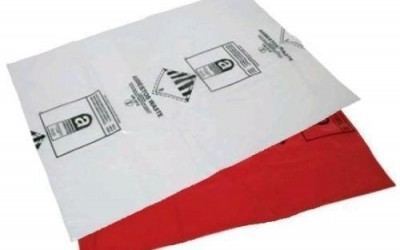
After you’ve taken all samples, any disposable clothing must be double bagged in asbestos labelled sacks. They will usually be a red and a clear coloured sack and can be purchased online. You will need to take them to your local asbestos waste disposal facility (contact your local council for details).
We hope this information has helped you and has given you a better understanding on how to recognise asbestos in your home or workplace.
If you need any help with asbestos sampling, testing or surveys, then contact us at Armco Asbestos Surveys on 0161 763 3727 or email info@armco.org.uk
Did you find this article interesting? Then check out our other interesting articles below.
For all your asbestos training needs call us on 0161 761 4424 or visit https://www.armcoasbestostraining.co.uk/asbestos-training-courses/ to book an asbestos training course.
Need an asbestos survey or a refurbishment/demolition survey? Then contact us on 0161 763 3727 or by visiting our sister site https://www.armco.org.uk/
Published Jun 24, 2019